
sword of the sea REVIEW
If I had to describe Sword of the Sea in three words, those words would be: Art in motion. From the moment I saw the announcement trailer for this game, I knew it would be a must-play. Its bold, captivating visual style combined with its satisfying flow-state gameplay seemed to be unlike anything I had experienced before -- especially given that I had not played Giant Squid's previous titles that feature variations of Sword of the Sea's distinct flow-state formula. Thankfully, those qualities carried over into this game, resulting in an experience that I found to be pretty enjoyable. Riding through the desert atop a hover sword while the surrounding sands rose and fell in gentle, smooth rotations delivered a delightful sensory experience; however, by a certain point, I found myself yearning for something more to grab onto beyond the novelty of its visuals and gameplay. As a result, my time with Sword of the Sea was indeed memorable, but left me wanting just a little bit more from the overall experience.
A Remarkable Sensory Experience
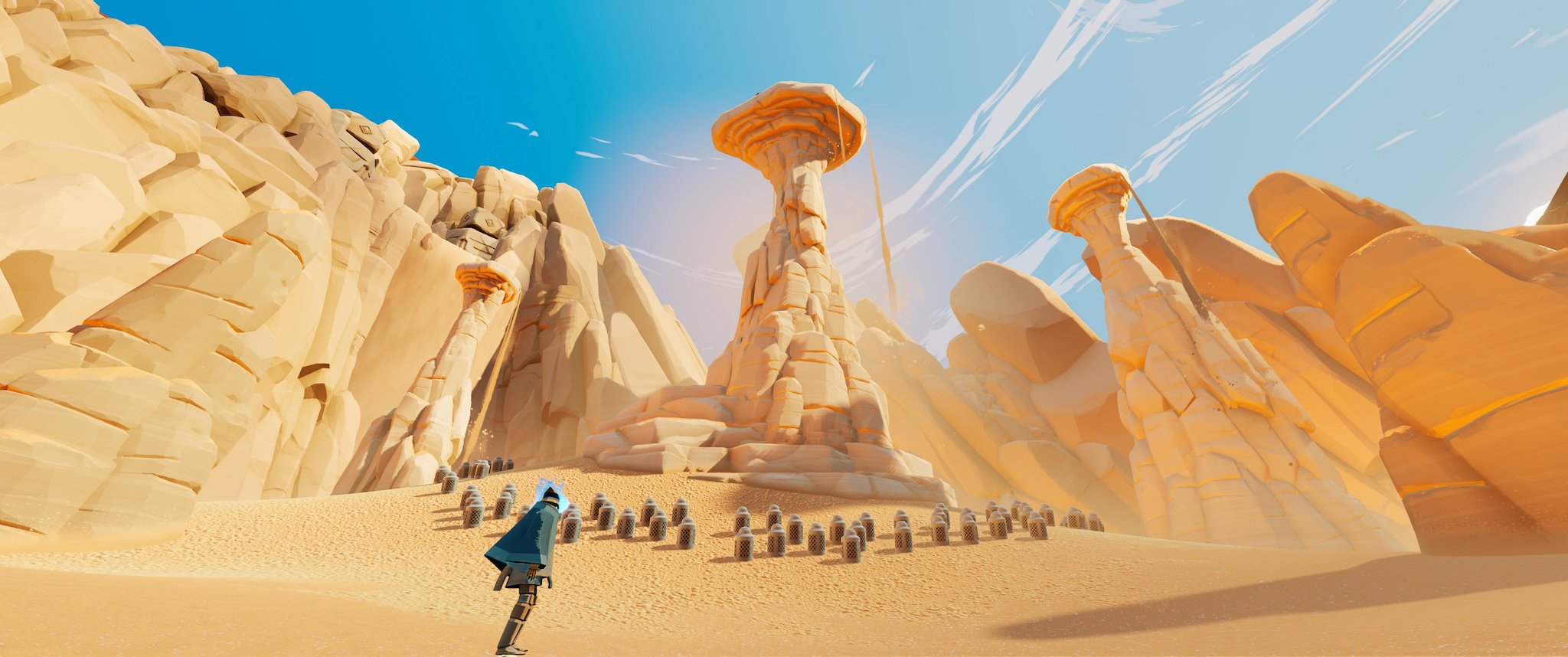
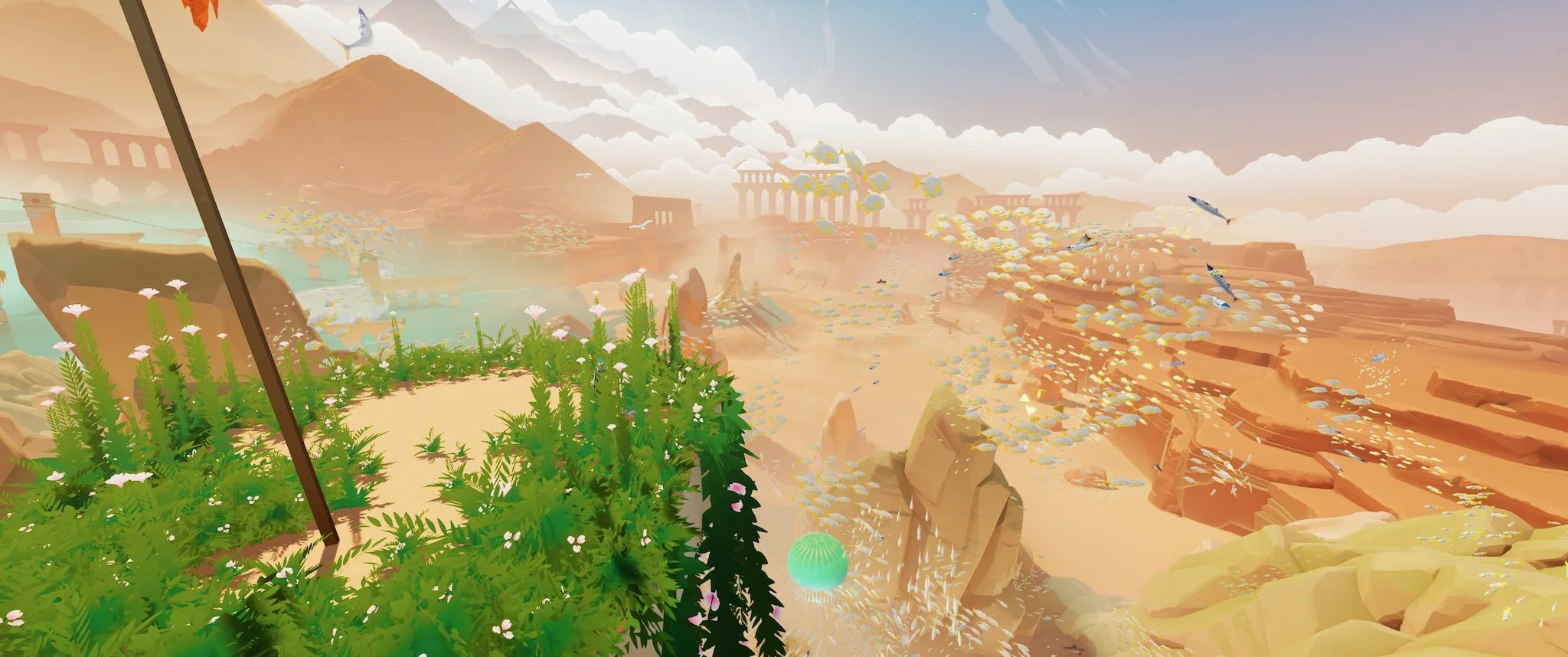
Giant Squid does a great job immersing the player in Sword of the Sea's gorgeous visuals and vibrant art style right from the get-go. From the moment you set off into the game's first biome, The Veiled Sea, you're greeted with a suite of brilliant colors and textures as you effortlessly glide across the sea of sand. Playing with a PlayStation DualSense controller, I recall feeling a slight rumble as I pushed forward, which delivered an immersive touch that made me feel connected with the game's movement. As you slowly transform the desert sands into a vibrant blue sea of water, the landscape becomes filled with natural life such as algae and schools of fish. It's an incredibly satisfying visual to behold, and as you push forward to unlock the sea from the sand, the visual splendor only becomes more captivating.
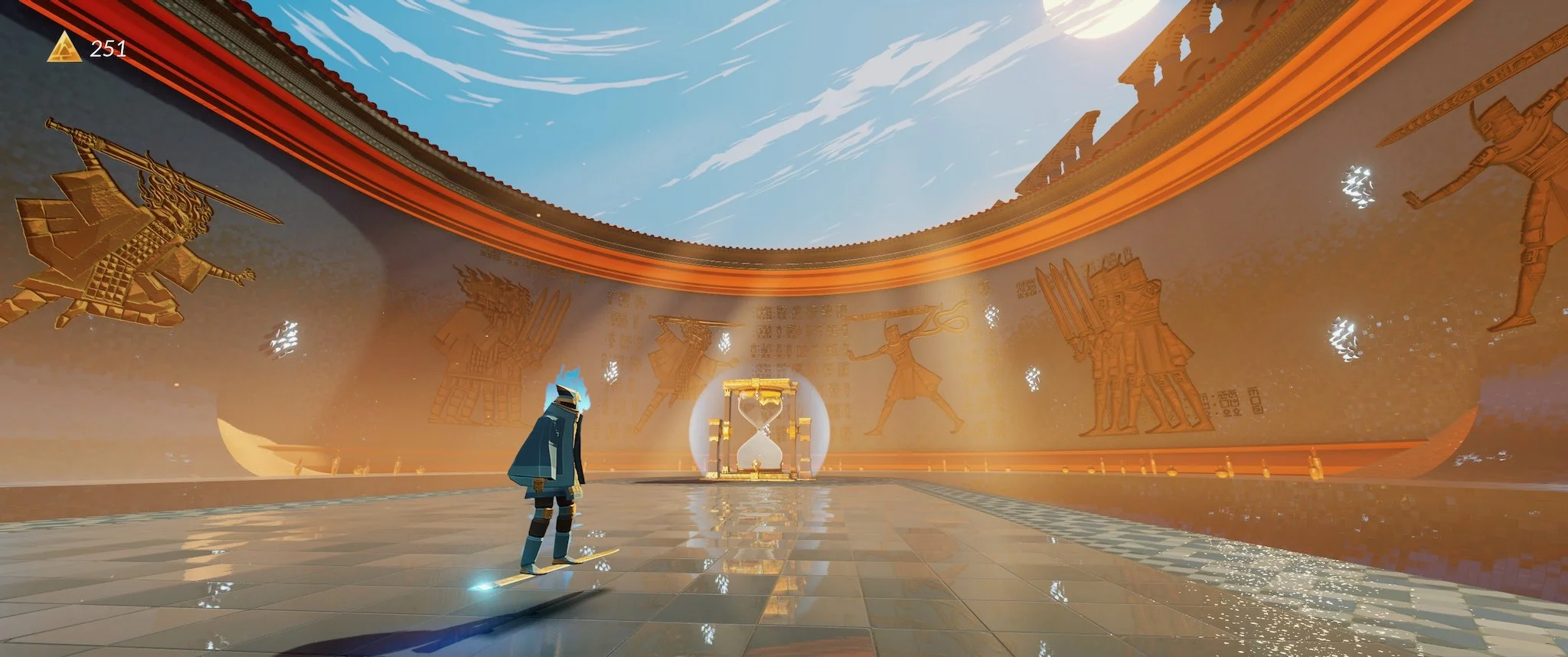
Riding atop the hover sword just feels right. Whether you're burrowing in a straight line or carving up slopes through a cavern, the riding controls feel smooth, fluid, and responsive. I never found myself awkwardly running into walls or into other obstacles that would have otherwise interrupted the immersion that riding on the hover sword creates. What's more, performing tricks in Sword of the Sea is pretty fun to do, with a handful of score-based trick challenges throughout the world available for you to engage in should you want to put your skills to the test. So, while Sword of the Sea's trick system doesn't boast the depth of a proper extreme sports game, it does feel like a nice little addition to the gameplay, and I didn't feel it needed to be anything more than that.
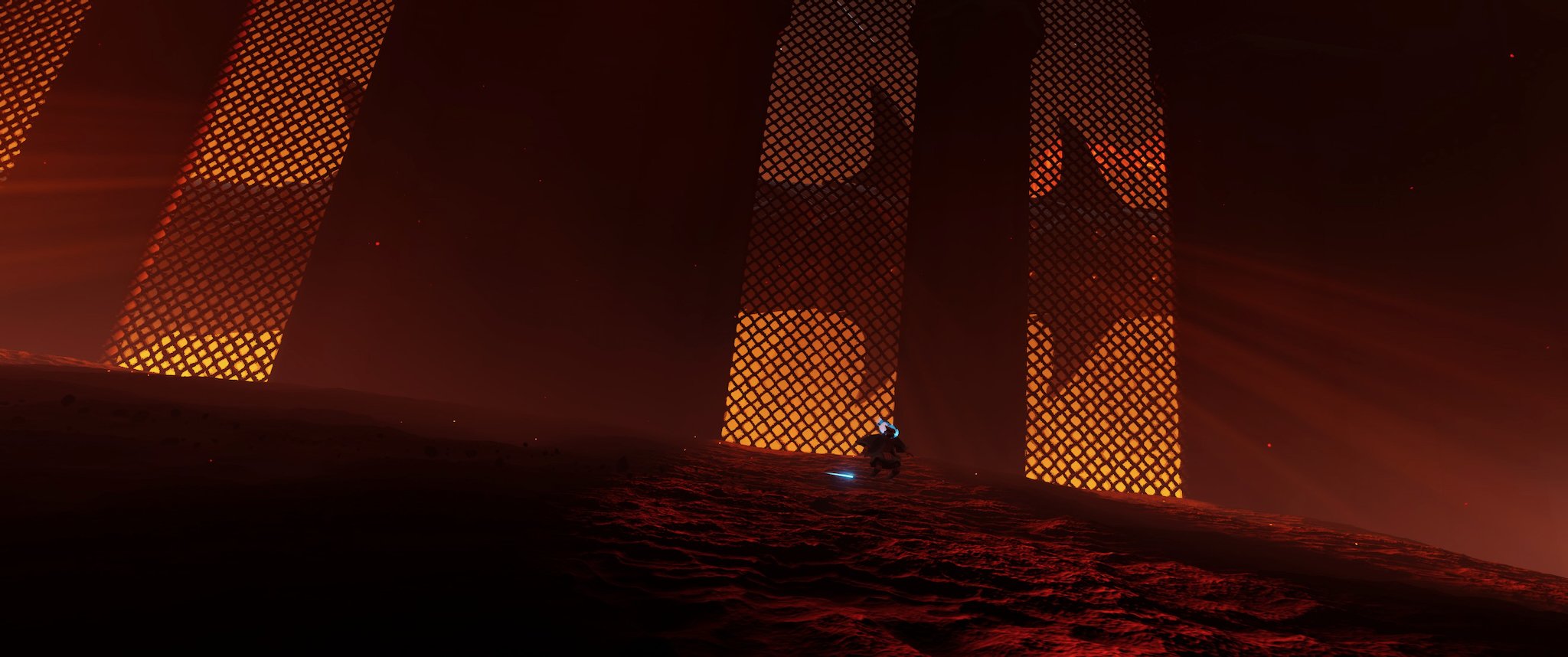
Completing the sensory immersion that is Sword of the Sea is its remarkable score. Composer Austin Wintory took great care to craft a meditative soundscape rich in color, emotion, and depth, with each track feeling like a perfect complement to the game’s suite of stunning environments. It beautifully adds to the experience of riding at top speed through the sands, or hopping atop jellyfish springs in water-based biomes, and so on. If you have a good pair of headphones as part of your gaming setup, I encourage you to use them while playing this game, so you too can be fully immersed in Austin's remarkable work.
A Story Told Through Movement
In Sword of the Sea, you're tasked with restoring the world to its natural form after a calamity from the past laid waste to it. Throughout each environment, you'll search for hidden points of interest that you'll engage with to restore a small section of that particular level until the whole biome is restored. The points of interest vary from level to level, with the challenge of reaching them steadily increasing as you progress through the game. Even as I pushed through the final level, I never found these challenges too difficult to complete, which makes sense, because turning Sword of the Sea into a difficult puzzle game would most definitely take away from the novelty of its ever-forward momentum. So, we have an objective, but do we have a story?
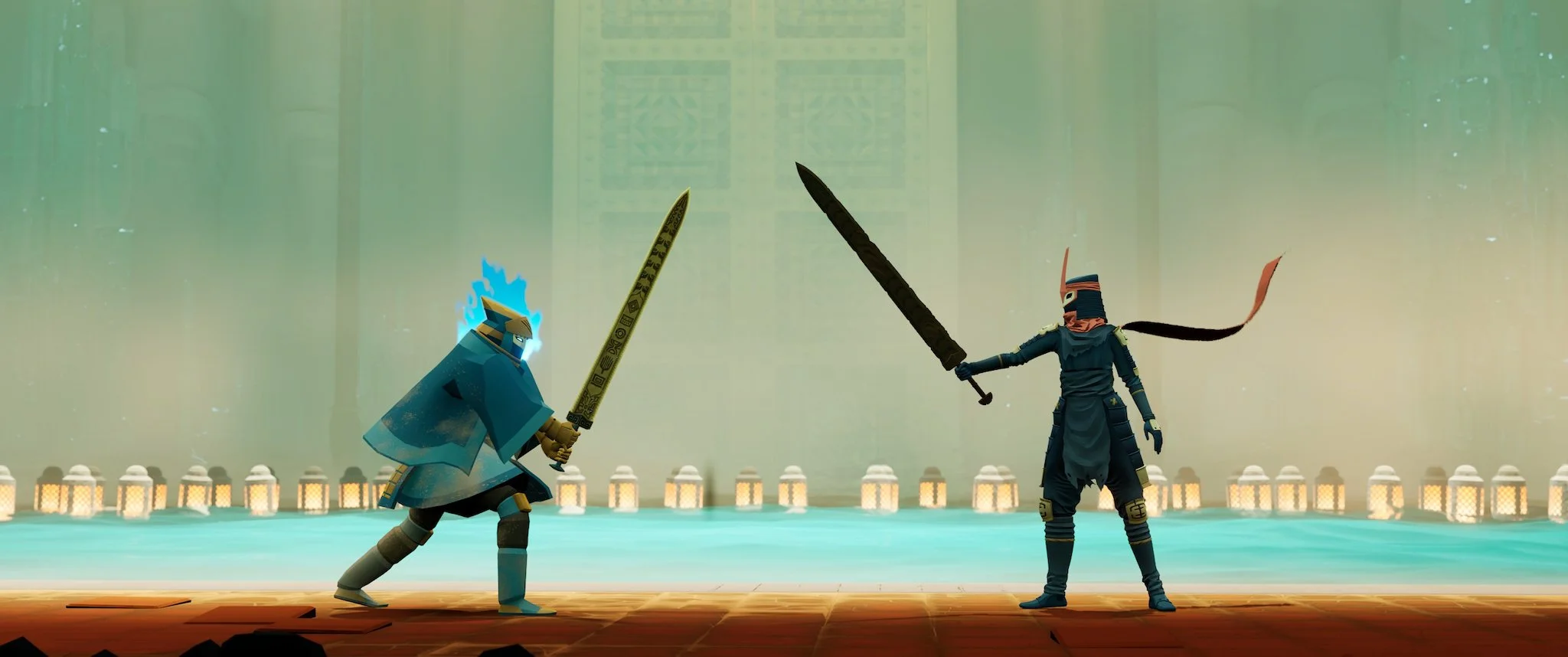
Yes, well, kind of. Sword of the Sea features no dialogue whatsoever. The only thing providing any information about your journey is the handful of stone tablets laid throughout the world recounting past events through poetic breadcrumbs. This hands-off approach to the game's storytelling creates an air of mystery to the experience that I found to be really interesting. What's more, much of the emotional elements of the story are conveyed through the silent interactions between the game's two characters -- an approach I've recently come to appreciate with games like Donkey Kong Bananza. However, throughout my playthrough, it was always evident to me that the focus wasn't on the story; rather, it was on the novelty of its gameplay and presentation.
Verdict
In short, I really enjoyed my time with Sword of the Sea. So much so that Giant Squid's previous titles, such as Journey and The Pathless, have moved to a pretty high spot in my gaming backlog. Sword of the Sea is an absolute visual and auditory delight, boasting a vibrant visual style and a masterful original score that makes it a truly distinct experience. What's more, few things in video games feel as satisfying as riding atop the titular hover sword -- making it the thing I'll remember the most when I look back on my time with Sword of the Sea. However, while its short three-hour runtime served up a refreshing break from what has been a long year of non-stop 60-70 hour triple-A behemoths, I found myself wishing Giant Squid had baked a little more into this experience. Perhaps an extra story element or one extra biome to traverse would have made the experience feel more complete. Nevertheless, if you're looking for a short, meditative experience that'll serve as a nice treat for your senses, I strongly recommend checking out Sword of the Sea!